


|

| MAIN | SEARCH / ARCHIVES / NOTES | RSS |
The dancers are in the venue early, working on accumulating ideas for the two encore songs that currently serve as our finale. At present they aren’t dancing in those songs, and it seems a shame for them to essentially drop out of the show at that point — so that will change after our Thanksgiving break. Some of their ideas are based on the movements I’ve been doing during those songs, but both their movements and mine will probably get expanded, tweaked and organized during some dance rehearsals we have scheduled over the break. It’s a rainy day here, and, as sometimes (but rarely on this tour) happens, we’re stuck at a hotel in the middle of nowhere because everything in town was booked many months ago for some massive convention. I wake up on the bus and look out the windows and see an expanse of highways, parking lots and identical building blocks. We’re 6 miles from the center of town and at least 4 miles from the venue. I inquire about whether there is any mass transit into town nearby — PHART (Philadelphia area rapid transit), as Paul Frazier refers to it — but it’s not close by, either. I hitch a taxi ride into town with Jenni and Steven, who are going to the Mütter Museum, a wonderful wunderkabinett of gross-outs and medical curiosities. I’ve seen it before, so I head to the Philadelphia Museum of Art where there is an exhibition of Gee’s Bend quilts and a retrospective of work by a man named James Castle, whom I suspect not many have heard of. At the top of the steps to the art museum tourists strike Rocky Balboa poses, their fists up in the air. There are lots of Rockys today, as it’s a weekend — a black-suited Chinese man, a young black kid from a school group and a large white man all assume the position simultaneously. The Gee’s Bend quilts are something special. They were previously shown at the Whitney in NY, and one can see why. They are made by a small community descended from former slaves on a river near Selma, Alabama. The website states: After the Civil War, the freed slaves [almost all from one plantation] took the name Pettway, became tenant farmers for the Pettway family, and founded an all-black community nearly isolated from the surrounding world. During the Great Depression, the federal government stepped in to purchase land and homes for the community, bringing strange renown — as an "Alabama Africa" — to this sleepy hamlet.
From Seattle PI:
New York Times senior art critic Michael Kimmelman called the quilts "some of the most miraculous works of modern art America has produced. Imagine Matisse and Klee arising not from rarefied Europe, but from the caramel soil of the rural South.
Thelma Golden, chief curator at the Studio Museum in Harlem, took a contrary view. She wrote in Artforum that she loved the quilts but hated the exhibition, "which, with its shockingly politically correct tone, under the transparent cover of high/low intervention and demolished media categories, was the most culturally repugnant, retrograde moment I have ever experienced, perhaps in my entire professional life."
Kimmelman's reaction was widely shared. Golden stood alone, or nearly so, at least in public. The subtext of her argument seemed to be that she recoiled at the sight of white people exclaiming over black craft. Their admiration struck her as patronizing. For the same reason, some black people do not want to listen to black blues artists playing in clubs filled with white people "getting down," because white joy of that sort saps a black experience of its legitimacy, creating a chasm between the art and its original audience.
Kimmelman and Thelma’s reactions raise a whole world of questions. Does it matter where these objects — or others exhibited, recorded or written — come from? Does context and history determine the meaning of what we look at and see? In other words, are these quilts amazing because they are made by women unschooled in art history or are they incredible for what they are? Is a song by an unschooled self-taught musician any less moving, deep and wonderful that something by an academic composer? (There’s an amazing record of spiritual songs recorded at Gee’s Bend.) Is there any way to hear or see things free of history, class or context? Probably not. Does it matter? All of this sort of applies to James Castle’s work — and to lots of other stuff as well. We’re not just talking about some quilt makers here.
Here’s one made with leftover blue jeans:
When we see these quilts, do we see them through our knowledge and experience of Klee and Matisse? (I’d add Rauschenberg and Sigmar Polke to that, too.) Here’s one made out of football jerseys:
And another that incorporates images and text “panels”:
Have we learned to experience these disrupted and “musical” patterns though our experience of fine art? Is that similarity what makes us stop in our tracks when we see these quilts? That certainly must have had something to do with why they have been exhibited in a series of high art institutions. But I would argue that’s not the whole story. The inventiveness, the mixture of African rhythm and Amish austerity, the humor and creativity visible in these quilts is not something only students of art history can experience. Those qualities, I maintain, are human, and they cross race, class and social barriers. I think that the erasing of those lines is part of what we’re seeing and experiencing as well, and it feels good. It doesn’t lessen the work’s context, the specific nature of the history of Gee’s Bend or of each artist in the collective, to feel that either. Though part of the picture painted here is of an isolated community, separate from the contamination of the marketplace and the art world, that’s not entirely true, at least not the first part. Some of the Gee’s bend quilters were contracted by Sears, the giant mail order dept store, to make pillowcases in mass quantitites that were informed by their tradition. The remnants from the pillowcase material, particularly an avocado green fabric popular for one decade, found its way into the quilts as well. So they’re not “pure” in that sense, though we might wish they were in certain ways. But that lack of purity is often where the joy and creativity lie, and the obsessive need for authenticity and purity are often what saps the life out of a tradition or out of a person’s creative impulse. James Castle was a deaf man born at the turn of the 20th century on a farm in Idaho. He refused to learn to read, write or sign, but he made lots of art. The work I’d seen previously were “drawings” of banal farm scenes — a barn with a fence, a shed with a chair — made out of soot and spit. This show, a retrospective, shows that he made a lot more than that, in a variety of styles and mediums. As with the Gee’s Bend crew, one can’t help but be shocked at the uncanny parallels to works by Warhol, Ruscha and a whole mess of others. Once again one wonders if those parallels make Castle’s work more incredible. Once again it would be hard to deny that those parallels are probably why his work is being shown here in a giant art museum. Here’s one of the shack interiors. Completely banal and schematic. There are lots of shack drawings, as if he was cataloging a typology of shack interiors and exteriors. His world, maybe?
A kaleidoscopic rendering of matchbox labels:
And a similar kaleidoscopic rendering of a photo of businessmen:
In these works and in some of the quilts there is what is now called appropriation — using recognizable labels, texts, and images — grabbing them, re-working them, re-presenting them. It’s a recognition that the glut of reproduced images, photos, logos, typefaces and texts that makes up our world and that of the 20th century is indeed our environment….even that of rural Idaho. Now, one of the qualities that is often brought up to separate Castle or the Gee’s bend artists from those who more regularly show in fine art galleries, auction houses and museums is intention. It is assumed that there is an awareness and intention in a work by Warhol, Ruscha, Betcher, Polke, whomever, that is not there in someone like Castle. I would suggest that his work proves that this is just not true. His intentions may not be geared towards the same marketplace, collectors and trade publications, but aesthetically it’s all there. The response to the world, a way of looking, a seriousness, and an investigation of phenomena, thoroughly done and from multiple angles — it’s all right there. I would argue that his work and that of the quilters proves that, well, nutty as it might sound, some part of the visual and material response to our world is innate — and like myths, a similar response might occur and recur across time and space — unconnected yet uncannily similar.
We got mail We in the band got e-mail and text messages from people all over the world expressing their joy after the election results came in. I got mail from France and Brasil, Graham got one from Germany, and Kaïssa got a letter from a friend in Senegal — here is an excerpt: “I could not miss this historic moment to express my profound admiration and sincere congratulations to my American friends for the incredible transformational power and the inspirational capacity of your society. Rosa sat so Martin could walk. Martin walked so Barack could run. Barack ran so our children can fly.”
Former Villages and Frank Lloyd Wright II (Fallingwater)
Thanks to Jenni’s friend Jim a bunch of us piled 8 bikes into the back of his pickup and we headed to a riverside park called Ohiopyle, which is also very near Fallingwater, the Frank Lloyd Wright house. At Ohiopyle there is a wide bike path along what once was tracks for a small railway that served little lumber and coal mining towns along the Youghiogheny River. The coal seams are visible everywhere, as the river has created a valley and the geological fault line cuts through here, hence the numerous waterfalls along the river. The area was once a booming tourist and resort destination, served by the same little railroads, but the car did in those spots and the villages, and the forest growth now covers what once were small towns. Jim says his wife, an archeologist, has excavated along this bike path, and that one can dig almost anywhere here and come up with remains of farms and villages. But as we pedal through the foliage there is absolutely no evidence of any former habitation. I scan the woods for house foundations, chimney stacks or such, but it’s all been covered up; there are no ruins or any evidence whatsoever of former human habitation.
The movie version of Cormack McCarthy’s “The Road” was shot in these parts — a story about traveling through a land after the civilization has collapsed. A few miles away is the Frank Lloyd Wright house Fallingwater, built by the Kaufmanns, a Pittsburgh department store family, in the late 30s as a summer retreat. Lily’s uncle Joe, who has joined us on this trip, says it was essentially a “party” house. This reminded me of my recent visit to the Glass House that Phillip Johnson build for himself in Connecticut. I could see that both houses were indeed essentially intended for entertaining important guests from town. Both of these houses also served as showcases for the architects — Wright was a low point in his career, almost bankrupt, and with no pending commissions, when Kaufmann Jr, who apprenticed under him in Wisconsin, encouraged his dad to hire Wright to build a rural retreat on some land they owned. Or so said Jr. — another version has it that Kaufmann Sr. had previously approached Wright about designing a parking garage next to the dept. store, as Wright had designed an innovative parking garage in nearby Maryland — so recent scholarship intuits that maybe Sr. let Jr. think he was more influential than he was. The initial budget was 20K, which must have been chicken feed to a wealthy family during the depression when labor was cheap. However, Frank’s work went over-budget, as architects are wont to do, and the final costs were more like 140K. That’s quite an overrun, though the total might still seem cheap to us now. As a showcase it worked spectacularly. Wright got new commissions before the work was even finished, and they kept coming in, a steady stream, until he completed the Guggenheim during the last year of his life. Kaufmann Sr. went on to commission a famous Neutra house out in Palm Springs.
One isn’t allowed in the house unless you’re part of a tour, so we took one, and were admonished many times not to take pictures and not to touch anything. The interior is weird and spectacular: lots of wide horizontal spaces with fairly low ceilings, views outside through creatively fenestrated windows that lead to or open onto large balconies that overhang the stream that runs under the house. The main room was obviously made for entertaining, as there are multiple sofas and little tables for large gatherings and groupings, and an expandable dining table for feeding guests. The bedrooms and bathrooms, as is often the case in Wright houses (and those of his son, Lloyd Wright), are small and fairly claustrophobic. Kaufmann Sr. and his wife had separate bedrooms, which seems odd to us now, and Mrs. Kaufmann’s bed was by far the largest. One has the sense of being in a beautiful sculpted cave with many chambers, wrapped in a lovely womb, conveniently with multiple views of the outside world. One is in semi-darkness, sheltered, secure, and yet able to see the surroundings at the same time. I suspect this secure yet advantageous position, in principle much like a concrete gun bunker, gun turret or an animal’s nest, satisfies some deep biological need for protection as well as strategic position. Wright may have been tapping into biological needs more than he knew. The house was in danger of falling down a few years ago, as Wright worked intuitively and didn’t always take practical matters into hand. Millions were spent to invisibly shore up the balconies. Surveillance cameras were installed, disguised as stone building blocks.
In addition, the flat roofs were not designed to support the weight of winter snows around here (this was a summer getaway) so servants had to push the snow off the roofs and balconies whenever it accumulated. So much for integrating architecture and landscape, at least beyond the visual. Kaufmann Jr. later became director of the industrial design dept at MoMA, in NY, which encouraged “good” design. One can debate the merits of promoting “good” design to the masses, but that propaganda effort has certainly had a lasting effect, and the linking of the design of a certain class of quasi-mass-produced household objects with high modernism and fine art was no small thing either, whether one agrees with the idea or not. Jr. had Fallingwater to himself from 1955 to 1963, after his dad died. Our tour group asked the occasional impertinent question of our guide, who kept her information flow to the straight and narrow. We tried to imagine the parties. Given that this was 75 miles from town, many of the evenings must have been sleepovers. The questions culminated in someone asking if Junior ever married. When the answer came back no, someone in our group shouted “bingo!” Our poor guide put her hand to her face as if this was all too much. Pittsburgh comes back
About 4 years ago when I was here I was given a short tour of the area by my friend John Chernoff. He told me how the Heinz family was intent on bringing life (and eventually living) back into the downtown of this former industrial giant. We passed through neighborhoods of former steelworker housing – areas on the verge of coming back after years of being abandoned. Like Detroit, Cleveland and many others, this town got dealt a series of body blows in previous decades and some of those towns have managed to remain standing while others are definitely on the mat. On this visit it seems that Pittsburgh is more than just standing — the cultural district downtown was jumping on the weekend, the little neighborhoods were thriving with their corner bars and grocery stores, the strip district still has its booming markers and, I was told, folks are moving back into the city. This latter is essential, as it will provide the tax base, and the humanity, that will allow this kick-start that the Heinz family and others have initiated to keep running on its own steam.
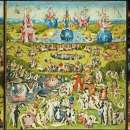
I stayed in as the election results came in. Checked the TV now and then as Obama pulled ahead. Steven says he was on St. Mark’s Place and the street was closed and filled with people; Paul said the Lower East Side was like a huge party; Ray was in Times Square and Rockefeller Center and said it was just a wonderful heartening feeling to see all kinds of people of all races and nationalities out there celebrating; Graham was in Harlem at Sylvia’s and, needless to say, there were celebrations up there big time; and Kaïssa’s mom in Cameroon got up at 5 a.m. to follow the election progress. As one might expect, much of the rest of the world, even those who traditionally are critical of the US, are heartened and overjoyed at Obama’s victory. It renews their faith in the myth of a country where miracles can happen and where a child of immigrants can be elected president. Not just his person and his history, and what that represents, but his policies and voting record have instantly turned the Empire into a less belligerent and bossy world power and a little more the beacon of democracy, possibility, and equality that is always espoused. There might even be a return of some respect, maybe, though years of work by Bush and his cronies did an amazing job of trashing that around the whole globe. People do want the hope and possibility that the US stands for and sometimes even offers. It’s amazing how so quickly the US might regain that, in the hearts of its own people and of those watching around the world. Yes, we can. Not to put a sour note on the celebrations, but I can’t help wonder at what will happen to race relations in the US now. I suspect a lot of folks will feel that if a black man can be elected president, from a single parent household and with not a whole lot of connections and help, then why should other black folks deserve help and assistance? There may be a feeling that if Obama can do it, why can’t the rest of you out there pull yourselves up by your own bootstraps? There might be a feeling that, “Hey, how can anyone claim that there is discrimination now? So why are we spending all this money to help folks?” Well, the US is still largely a racist country that discriminates — that isn’t going to change in one night. But the election definitely does give one hope that most of the country can put that aside and inch a little bit closer to being colorblind. A friend who was going door to door for Obama in Pennsylvania, hitting the houses where the voters were undecided, got into discussions during which many of the white folks claimed to agree with Obama’s positions, but some, mysteriously, just couldn’t take the next step of saying they were going to vote for him. She, the volunteer, suspected it was race that might be holding them back, and carefully pressed them on that point. Some of them admitted that that’s what it was, whereupon she sometimes said, “It’s OK to be racist [or something to that effect] but don’t you want to vote for what’s right for your country? You can still be racist and vote for a better life for yourselves.” Wow, don’t know if I could have pulled that line of reasoning out of a hat! No doubt about it, it’s a huge step that’s been taken. Gives one a little faith in human beings for a change.
Election Day I'm scared to look. Paint on Canvas
In an article in the weekend Financial Times, Jackie Wullschlager writes about a show of Renaissance portraits at the National Gallery in London. She makes a series of broad statements about the contemporary implications inherent in the changes portraiture went through at that time. Jackie says, for example, “the more human individuality is threatened — by biogenetics, global capitalism, the identikit personae of YouTube — the more intensely we turn to painted portraits.” I remember hearing something similar in a YouTube video, “An Anthropological Introduction to YouTube,” by anthropologist Michael Wesch and his class at Kansas State University. That piece is exactly what it says it is, and, of course, it itself is also a YouTube phenomenon that looks at other YouTube phenomena and back at itself. Anyway, one of the points he and his class make is that as certain values get eroded by phenomena or technology they simultaneously become more valued. They mentioned authenticity as being a value that is highly prized among YouTube denizens, as it is relatively easy to fake a posting. And therefore, the whole YouTube world prizes stuff that isn’t slick, or God forbid fake, but is “real.” When anything can be virtual, then “real” becomes precious. So, I can see what Jackie is getting at — that the humanistic values implied by the new (at the time) Renaissance portrait styles might have contemporary relevance. Jackie also says that previous to the Renaissance, full frontal portraiture (not full frontal nude body images) were reserved for pictures of Jesus. So, by implication, to paint real people in that way was to say that the individual is no less than the God(s). That we each have a spark, a dollop, of Godness in us, and it’s always a little different. Maybe this was the beginning of the rise of the cult of individuality, of the idea that each of us is completely unique. Each a nation unto itself. Now science is telling us that maybe we’re not as unique as we would like to think. We’ll see where that leads. Of course, portraiture was originally reserved for the rich and powerful — royalty, popes, bishops and powerful merchants. But eventually, the less wealthy merchant classes soon adopted it. Jackie quotes an Italian satirist, Pietro Aretino (1554), who laments that “even tailors and vintners are given life by painters.” God forbid. So, the rich and powerful did what they always do; they changed the rules of the game to maintain their distinction. They could afford to, so they had their new portraits done giant size. Or what was then giant size. It goes without saying that only they had the wall space for such large-scale works. When is a painting not a painting? When it is a hot line to God. In another article in that paper, Robin Blake reviews a show of Byzantine works that includes a number of icons. These paintings were, he says, not revered for their painterly qualities and certainly not for their humanistic values. They were closer to sacred relics according to Blake. Like the bloody nails, bones, and wood fragments elaborately displayed in many churches today. “Any pious person who tried hard enough, it was thought, could establish a hotline to the divine through the painting.” Not only were these paintings powerful agents in this way, but also their power could be multiplied and transferred. (Walter Benjamin, take note). A copy, maybe every copy, maybe even bad copies, of the original icon was believed to somehow partake of the power of the original. This is digital technology from 1000 years ago! Where the copy and the original are identical — at least identical where it matters. I remember going into some Orthodox churches in Greece while there on tour and seeing women kissing the images on the icons. Not tongue kissing, mind you, but there was definitely passion of another sort involved. I wondered to myself how many contemporary artists might wish their work could elicit such a powerful reaction. Needless to say, one doesn’t judge these “artworks” in the same way one judges other portraits, just as a splinter allegedly from the cross is no mere chunk of kindling. Art criticism in this case becomes useless, and aesthetics too — it all becomes irrelevant.
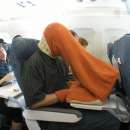

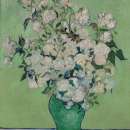
C and I bike along the bike path that runs along the Charles River to the Harvard Museum of Natural History. It’s a gorgeous fall day and the leaves are just beginning to turn here. We’re going to see the famous collection of glass flowers made by father and son Leopold and Rudolf Blaschka, who were based near Dresden and worked from 1886 to 1936. For the time being, some of their glass sea creatures are on loan here as well. I’ve heard about these for ages but have never seen them, and they don’t disappoint. They’re entirely made of glass, though there are, sometimes, invisible wire supporting structures. Even the coloring is made of glass and they aren’t transparent or translucent as one might expect. The brothers used a kind of painted enamel of colored glass powders which was then fused with the models. One might also expect exclusively flowers, as that is what the collection is called, and one might imagine vaguely pretty copies of lilies, roses and orchids. Well, those are there, but most of the specimens — they were commissioned by a Harvard professor for teaching biology — are much more mundane, and all the more spectacular for it. Some look like common weeds, ripped out of the garden with a tangled bundle of roots dangling from the bottom. And here they are, made entirely out of glass.
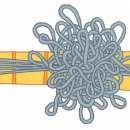
Here’s a tangle of leaves, tendrils and the traps of a pitcher plant:
It’s all glass. Just amazing. Sort of crazy too. But when one imagines that there was no color photography to speak of then, and this would have been an imaginative way for the professor to have “specimens” available for his classes all year round…add to that that it would have been a lifelong commission for the Blaschkas, and the obsessiveness makes a little more sense. The father and son team took their secrets to the grave. Here’s a sea slug made of glass:
This wonderful little museum is located right in the middle of Harvard University. We rode through the yard to reach it. The nicely mowed lawns, hidden from the surrounding streets, the august halls and weight of history and reputation — well, one can easily see why students here might come to feel separate from the world, and slightly superior to it as well. Cambridge, in England, has a similar vibe, a feeling that here is where the masters are handed their instruction manuals. After that we biked to the relatively new Institute of Contemporary Art building to catch Tara Donovan’s show there. The ICA is located in a sea of parking lots just south of downtown Boston. It’s an odd area, but they do at least have a spectacular view of the bay. Donovan’s show was just amazing. Her work usually consists of installations of ordinary materials, lots and lots of them, arranged on a wall or on a floor in a way that, hey, reminds me of coral reefs or weird sea creatures. Photography was not allowed, but I snuck a snap of a ceiling piece made of Styrofoam cups. Sometimes these pieces are not even glued together. There was a spectacular wall of drinking straws that, we were told, collapsed during installation, and so tiny bits of glue were needed to prevent another disaster.
As you can imagine, these pieces can’t be picked up and plopped down just anywhere. Transportation is impossible for many of them. They have to be, most of them, re-made every time. The local biologists, evolutionary scientists and similar folks at Harvard and MIT are, we were told, enthralled. You can see why.
It’s getting colder. There’s snow on the ground, but Lily, Mark, C and I bundle up and ride down along the canal that borders the St. Lawrence until we get to the old part of town. We stumble upon a couple of amazing costume shops and, as Halloween is tomorrow, we stock up. The shop is crowded — today must be their big day — and the place is filled with folks who want something beyond the traditional mass produced costume. The transactions are all in a mixture of French and English. I purchase some items for everyone and everything I buy is white. The show is in a massive club, almost like a theater, with the front area reserved for standees. So this particular audience is on their feet from the start. Friends from Arcade Fire drop by — they’re in the very early stages of beginning a new recording — as does Dan Levitin, the neuroscientist at McGill who writes about music.
C and I bike around town to check out the various contemporary art museums. The Ydessa Hendeles Art Foundation is closed, as is the Museum of Contemporary Canadian Art and the Art Gallery of Ontario, which is being remodeled. I opt for getting my bike repaired; the travel has taken its toll.
The air is cold and clear and the wind in the early part of the day is bearable, so we bike south along the lake for a few miles. Heading back towards town, gray clouds roll in and it cools down. The wind picks up and we see some snowflakes; not so pleasant anymore.
Our show is in the opera house — very fancy, prestigious and grand. I am surprised that the folks in charge allow the audience to dance in the aisles, as they do for the last third of the show. I can’t imagine that being allowed at Lincoln Center, for example. The next day C, Mauro and I bike out to Oak Park, where there are a whole bunch of Frank Lloyd Wright houses, including his very first commission after he left the Sullivan firm. That one looks more like a Victorian Gothic mansion gone out of control, but one can see hints of what was to come. I prefer the prairie style ones that came later, which seem to contain mixtures of suburban ranch, Gothic fortress and art nouveau/deco.
Some of his other vaguely modernist ones look less uniquely modern in the context of the surrounding houses in this neighborhood. The Wright houses are sometimes like morphed versions of the surrounding midwestern suburban houses — elongated, fractured and stretched — but with many of the same elements still intact. One can see where his style came from by looking up and down the street. In architectural books one sees his houses in isolation and they seem to have sprung out of Wright’s imagination fully formed and out of nowhere, but that’s clearly not the case. While the other houses are nowhere near as original, there is a common solidity and grammar.
Wright’s home and studio was in this neighborhood too, at least for a while. It seems almost a little incestuous; the neighborhood architect, getting commissions from his immediate neighbors (many of his commissions are on his own block), reworking the kinds of houses that surround him. On the way out, a long bike ride west on Chicago Avenue, we passed out of downtown, over some rivers and then first through a Latin neighborhood in the process of being gentrified and flavored with some hipster elements. Alongside the bodegas and Mexican groceries are some indie record shops and fancy restaurants and lounges. Interspersed with this are elements of the long established Eastern European population that makes up much of Chicago’s history. The layers of communities and immigration are all right there. The Ukrainian Institute of Modern Art is closed, but their website shows that there is a lot more going on besides pierogies and kielbasas. A little further away from downtown this neighborhood gives way to the ghetto, where there are storefront churches, guys in hoodies manning the corners, lounges, fried chicken and fish fry joints, liquor stores and check cashing stores. One church creatively uses a 60’s plastic chair to represent the hand of God, or maybe Jesus.
A lounge called Dr J’s Place also sells package goods. Their sign lists 3 kinds of music that they feature — rock, blues and dusties. Dusties are RnB oldies from the 40s, 50s, 60s and 70s.
There’s a major FFA (Future Farmers of America) convention in town. They’re swarming all over the hotel and the surrounding streets, with their blue jackets with patches commemorating their achievements. I covet the jackets, but don’t think there’s any way I will get one.
What is polyculture that Charlie digs? It’s growing multiple crops, a sort of imitation of natural diversity. It often replenishes the soil and is more efficient in the long run; the need for fertilizers is reduced, as well. The big monument in the center of town celebrates a series of historic land grabs masquerading as wars.
A series of military actions, in which land was usurped from the Mexicans, the British, the Indians, and then the Mexicans again, for a second time. The winners erect monuments to their victories while the losers quietly seethe and never forget.
Highway Robbery In an interview with The New York Times, Eminem reveals he rides a bike. See you on the streets of Detroit in a few days, Marshall. We have a day off here in the Land of Cleve, so a group of us hailed 2 taxis to take us to a movie theater in Shaker Heights to see W. I ride shotgun and when we tell the driver we’re going to see a movie, he volunteers that the last movie he saw was Last Tango In Paris. Hmmm. We ask the driver for his number so we can call him for a drive back and he hands me a card, saying, “This is MY number.” We arrive and the fare is a little over $18, so I pull out my per diems from my pants pocket and give him $100 and two singles and ask him for $80 in change. He takes just the 100-dollar bill and puts it near his crotch and begins to fumble with his change purse. After a bit of this, I remind him that he doesn’t have to make change — just give me $80. He then says to me that I never gave him the $100. I say I did, and he points to the remains of my per diem in my other hand and says, “There’s your hundred right there, this one is mine.” I say, “No, I definitely gave you the $100.” He repeats, “That’s your hundred in your other hand.” Oh, man. This goes back and forth a couple of more times and soon Ray and Kaïssa in the back seat both say, “We saw him give you the $100,” which gives me the assurance to keep pressing. If it were just me in the car, I might have started to doubt myself at this point…which is how these scams work. I say calmly to the driver, “Don’t do this, don’t go there,” but he keeps at it. A couple more calm exchanges, and then I snap. I start screaming at the top of my lungs at this guy, and remind him that “I’ve got your number in my back pocket and if you don’t fucking give me the money, I’ll call the cops, right now.” I have my hand on the door handle. He still hesitates and I continue to scream at him, “Alright, I’m calling the cops, you fucker.” I begin to open my door. He hands over the money and I give him a 20, plus a 2-dollar tip. Why in the world did I tip this guy? His initials on his card are R.A.S. and the phone number is 216-440-8568. My adrenaline is now sky high and Kaïssa and Ray help calm me down as we wait for the others to arrive; THEIR cab driver got lost! And this is not an obscure place, but a major intersection with shops all around. The next day in the afternoon, I ride out to a camera store to replace a lost charger. I go east on Euclid Avenue, one of the main drags of Cleveland. Or what used to be the main shopping street. For about a mile, I pass building after building, boarded up, abandoned or empty. Beautiful buildings too, with lots of character. It seems like this was, not too long ago, the main shopping street — a bustling area filled with folks buying and selling. Big department stores and offices. Some of these buildings are in the midst of renovation; their facades partially ripped off, scaffolding here and there, but the work seems to have stopped midway, for lack of funds I suspect. And given the economic earthquakes of the last few weeks, they’ll stay that way for a while. One boarded up building houses a child care center on the ground floor; another — this one not boarded up — is a center for monitoring child support. Ads on the bus stops remind young men that dads are important. It’s all too easy to connect the dots in the scenario painted by these institutions, or lack of institutions. One passes block after block of empty buildings and shops and asks, “How was it allowed to get this far?” Granted, lots of towns still have vibrant centers, and parts of Cleveland are still active — the clubs in the warehouse district and the fancier suburbs like Shaker Heights. But when encountering a place like Euclid Avenue, one thinks of the Mayan temples that were already being abandoned before Cortés even arrived.
What kind of people lived here? What did they make? Why did they leave?
This was always a factory town, full of immigrants, mostly from all over Europe. Poles and Greeks, Italians and Ukrainians. The lovely greenway I biked, along Martin Luther King Boulevard from the art museum to the lake, was dotted with statues and terraces commemorating each immigrant group. The Azerbaijanis pulled out all the stops. So, while Chicago may have the Anish Kapoor Cloud Gate in Millennium Park, Cleveland has this:
There’s an inscription nearby, just in case you don’t get the point, which says, “Azerbaijan, land of eternal fire, ignites the imagination, warms the spirit and kindles the soul.” The sons and daughters of these immigrants made for a legendary Rock and Roll audience in this town. Hard workers and hard partiers. They lay claim to the first Rock and Roll radio show and Allen Freed claims to have coined the phrase, though I suspect a “race” record used it way before that. So, there is some justification for the Rock and Roll Hall of Fame and Museum being located here. Hard to bottle the manic release associated with that music and its audiences and the loopy creativity of the forerunners of self-made popular music in a respectful museum setting. Hard bordering on impossible. Like most of these places, the organizers kind of throw up their hands and end up exhibiting a bunch of outfits and artifacts — my old big suit being one of them. I was tipped via an e-mail sent by a man named Tim Rossiter to my office. Tim wrote: “I've got to tell you about a special Cleveland treasure, Glenn Schwartz. Glenn started the James Gang in the 60s, then moved to California and was in the Pacific Gas & Electric Co. He flipped out soon afterward and was in religious communities. He's had a rough life and is tortured and crazy…Now Glenn is 67 years old and plays in a blues trio for free late every Thursday at a small bar called Major Hooples. There are typically 20-30 people there and he is jaw-droppingly amazing to see. His playing is like electric bolts straight from his psyche. He jumps off his amp and plays guitar with his teeth. And he often preaches fire and brimstone between songs. It's something very special and you won't see anything like it except on Thursdays in Cleveland.” Well, Tim didn’t exaggerate. The place was a low-key little dive and at one end, not even on a stage, was Glenn, his brother and a drummer, all playing at full volume. Sure enough, between amazing and inventive Hendrix-like solos, he would admonish the audience and prophesize “blood on the moon and War in America.” He may have lost his mind but his fingers are firing on all cylinders. The bartender told Natalie that if you wanted him to stop playing you just had to dance. Well, see for yourself. Apologies for the mostly lousy sound quality; Glenn’s playing deserves better, but you’ll get the idea. As Tim said, only in Cleveland.
[Link to video]
|